
Considering treatment in Naperville? Learn about our Semaglutide Programs service.
If you've been thinking about medical weight loss lately, chances are the first word that comes to mind is Ozempic. It is everywhere, in the news, on social media, in conversations at the grocery store. But Ozempic and its GLP-1 cousins are not the only prescription options, and they are not the right fit for everyone. Some patients cannot tolerate the nausea. Some do not want a weekly injection. Some have insurance that will not cover it.
This guide walks through the older, well-studied weight loss medications, phentermine, metformin, orlistat, and naltrexone-bupropion, and puts them side by side with the newer GLP-1 drugs on effectiveness, safety, and cost. Understanding the full landscape of weight loss medication in Naperville can help you have a more informed, more confident conversation with your provider.
The Full Weight Loss Medication Landscape in 2026
Obesity affects more than 4 in 10 adults in the United States, according to the CDC. Illinois is one of the states where at least a third of adults live with obesity, based on the CDC's most recent state-level data. Numbers like these are part of why the National Institute of Diabetes and Digestive and Kidney Diseases (NIDDK) now treats obesity as a chronic disease, not a matter of willpower.
The FDA has approved several medications for long-term, chronic weight management: orlistat, phentermine-topiramate, naltrexone-bupropion, liraglutide, semaglutide, and tirzepatide. Phentermine on its own is approved only for short-term use, typically a few weeks at a time, per NIDDK.
Each medication works differently. Some reduce appetite, some slow fat absorption, and some do both. According to NIDDK, people who combine medication with a healthy eating and activity plan typically lose 3 to 12 percent more of their starting body weight after a year than people using lifestyle changes alone. Choosing the right weight loss medication in Naperville comes down to your health history and how your body responds, not which drug happens to be trending online.
The Older Options, One by One
Before GLP-1 drugs dominated the conversation, phentermine, metformin, orlistat, and naltrexone-bupropion were the standard tools for medical weight loss, and they are still useful today, especially for people who cannot take or afford a GLP-1 medication.
Phentermine: Who It Still Suits
Phentermine is an appetite suppressant that has been used for decades. According to MedlinePlus, it is meant to be used for a limited period, usually three to six weeks, alongside a reduced-calorie diet and exercise. It works by decreasing appetite, and most people take it once daily in the morning or in smaller doses before meals.
Phentermine tends to suit patients who need a short-term jump-start, who do not have heart disease, uncontrolled high blood pressure, or a history of drug dependence, and who understand it is not meant for indefinite use. It is not usually recommended for adults 65 and older, per MedlinePlus. Common side effects include dry mouth, trouble sleeping, and a racing heartbeat. Phentermine is also sold combined with topiramate as Qsymia, which is FDA-approved for longer-term use in adults and children 12 and older, according to MedlinePlus.
Metformin: The Off-Label Workhorse
Metformin is not FDA-approved for weight loss. It is approved to treat type 2 diabetes, where it lowers blood sugar by reducing the glucose your liver makes and helping your body use insulin more effectively, according to MedlinePlus. But it has a long track record in a related role: helping prevent type 2 diabetes in people with prediabetes.
In the NIDDK-led Diabetes Prevention Program, metformin reduced the risk of developing diabetes in high-risk adults, though lifestyle changes worked even better, according to NIDDK. Because metformin can produce modest weight loss as a side effect, some providers prescribe it off-label for patients with prediabetes, insulin resistance, or PCOS who want a gentler, lower-cost option than an appetite suppressant or a GLP-1. It will not produce dramatic weight loss alone, but it is inexpensive, generally well-tolerated, and useful as a foundation medication when blood sugar is already a concern.
Other Non-GLP-1 Options
Two more FDA-approved medications round out this category. Orlistat (Xenical, or Alli at a lower over-the-counter dose) works in the gut to reduce how much fat your body absorbs from food, according to NIDDK, and is not recommended for people who have trouble absorbing nutrients.
Naltrexone-bupropion (Contrave) combines a medication used in addiction treatment with one used for depression and smoking cessation, helping patients feel less hungry and full sooner, per MedlinePlus. It is not recommended for people with uncontrolled high blood pressure, seizure disorders, or a history of an eating disorder. Both medications are pills, which appeals to patients who want to avoid injections altogether.
Effectiveness and Cost: GLP-1s vs. the Rest
GLP-1 medications like semaglutide (Wegovy) and tirzepatide (Zepbound) generally produce more weight loss than the older options. Tirzepatide was approved by the FDA for chronic weight management in adults with obesity, or with overweight plus a weight-related condition such as high blood pressure or type 2 diabetes. Both drugs work by mimicking gut hormones that regulate appetite and fullness, according to NIDDK.
But more weight loss on paper does not automatically make it the right weight loss medication in Naperville for you. Phentermine, metformin, orlistat, and Contrave are all pills, which some patients strongly prefer over a weekly injection, and they tend to cost less out of pocket. Insurance coverage for GLP-1 drugs also remains inconsistent. Standard Medicare Part D plans do not cover GLP-1 medications for weight loss alone, though the Centers for Medicare & Medicaid Services (CMS) has introduced temporary demonstration programs to expand access for some beneficiaries. Private insurance varies by plan, so check your specific benefits before assuming a GLP-1 medication is either automatic or out of reach.
There is also a safety conversation worth having, honestly. The FDA continues to evaluate reports of suicidal thoughts or actions in patients taking certain weight-loss medications, across drug classes, and encourages patients to tell their provider right away about any mood changes, according to the FDA. This is one more reason medical supervision matters, whichever medication you choose.
How We Match Medication to Patient
There is no single "best" weight loss medication in Naperville, because the best medication is the one that fits your body, your health history, and your life. When we sit down with a patient, we look at:
Your BMI, and whether you also have a weight-related condition like high blood pressure, type 2 diabetes, or high cholesterol
Any history of thyroid disease, heart disease, seizures, or mental health conditions that could rule certain medications in or out
Whether you would rather take a daily pill or a weekly injection
Your budget and insurance coverage, since cost is often the deciding factor
What you have already tried, and what did or did not work for you
From there, we build a plan that may start with one medication and adjust over time. NIDDK notes that if a patient has not lost at least 5 percent of their starting weight after 12 weeks on a full dose, it is usually time to reconsider the approach, whether that means changing the medication, the dose, or the broader plan. Medication works best paired with realistic changes to eating and activity, and with a provider who checks in regularly.
Find Your Medication Fit: Book a Consult
You do not have to figure this out alone or guess which medication might work based on what you saw online. Our team at Naperville Health & Wellness Clinic will review your health history, talk through every option, from phentermine to metformin to the latest GLP-1 medications, and help you choose the weight loss medication in Naperville that actually fits your body and your life.
Book a consult with us today and take the next step toward a plan that works.
Call us at (877) 885-8784 to schedule your session or learn more.
Follow us on Facebook and Instagram for wellness tips, exclusive offers, and updates on our latest treatments!
FAQs
What is the strongest weight loss medication?
Based on clinical trial data, tirzepatide (Zepbound) and semaglutide (Wegovy) tend to produce the greatest average weight loss among current FDA-approved options. But "strongest" is not the same as "best for you." A medication only works if you can tolerate it, stay on it, and afford it consistently.
Is phentermine cheaper than semaglutide?
Generally, yes. Phentermine is an older, generic medication and typically costs far less per month out of pocket than brand-name GLP-1 injections. Exact pricing varies by pharmacy and dose, so ask your provider or pharmacist for a current estimate.
Can you combine metformin with GLP-1s?
Yes, this combination is used, particularly in patients who have type 2 diabetes or insulin resistance alongside excess weight. Because both medications affect blood sugar and digestion, it should only be done under a provider's supervision.
What if I can't tolerate GLP-1s?
Nausea, vomiting, and stomach upset are common reasons patients stop GLP-1 medications. If that happens to you, weight loss medication is not off the table. Phentermine, phentermine-topiramate, metformin, orlistat, and naltrexone-bupropion are all alternatives your provider can discuss before switching entirely.
What weight loss medication does our clinic offer?
At Naperville Health & Wellness Clinic, our medical weight loss program includes Semaglutide and Tirzepatide, supported by lab testing and a 3D body scan so we can track real changes in your body composition, not just the number on the scale. We build every plan around your specific health picture.
Treatments Covered in This Article
Related Articles
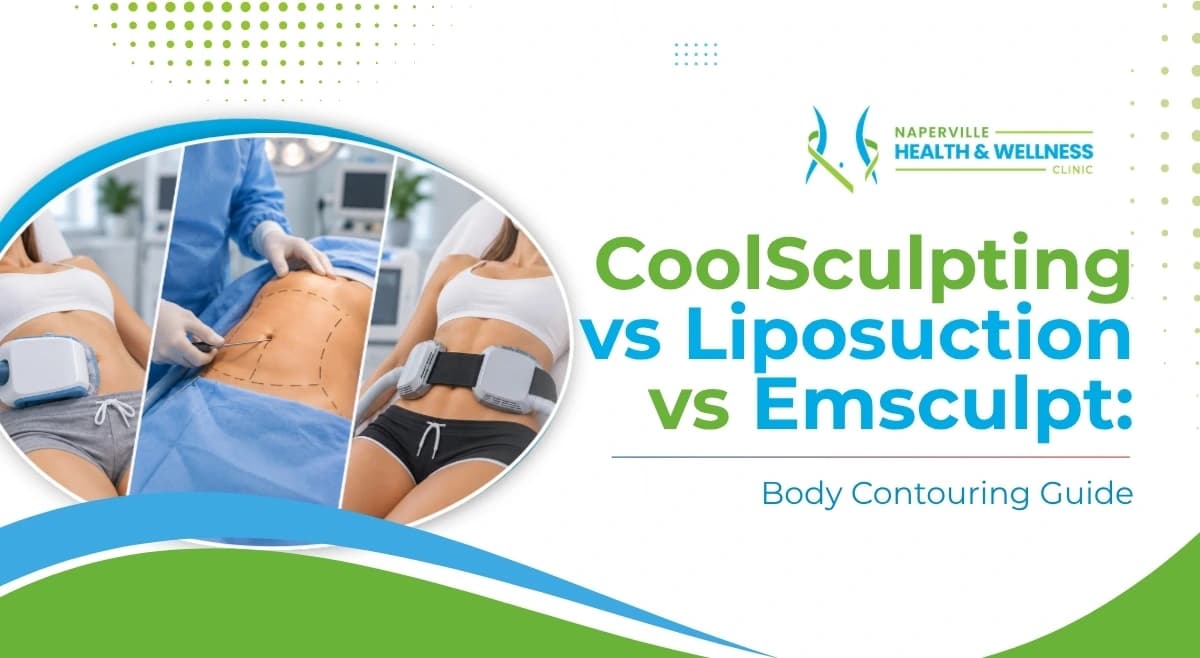
CoolSculpting vs. Liposuction vs. Emsculpt: The Naperville Body Device Guide
CoolSculpting freezes fat, liposuction removes it surgically, and Emsculpt works your muscles. Here is what the FDA and NIH actually say about results, recovery, risks, and cost, so you can pick the right option before you book.
Read More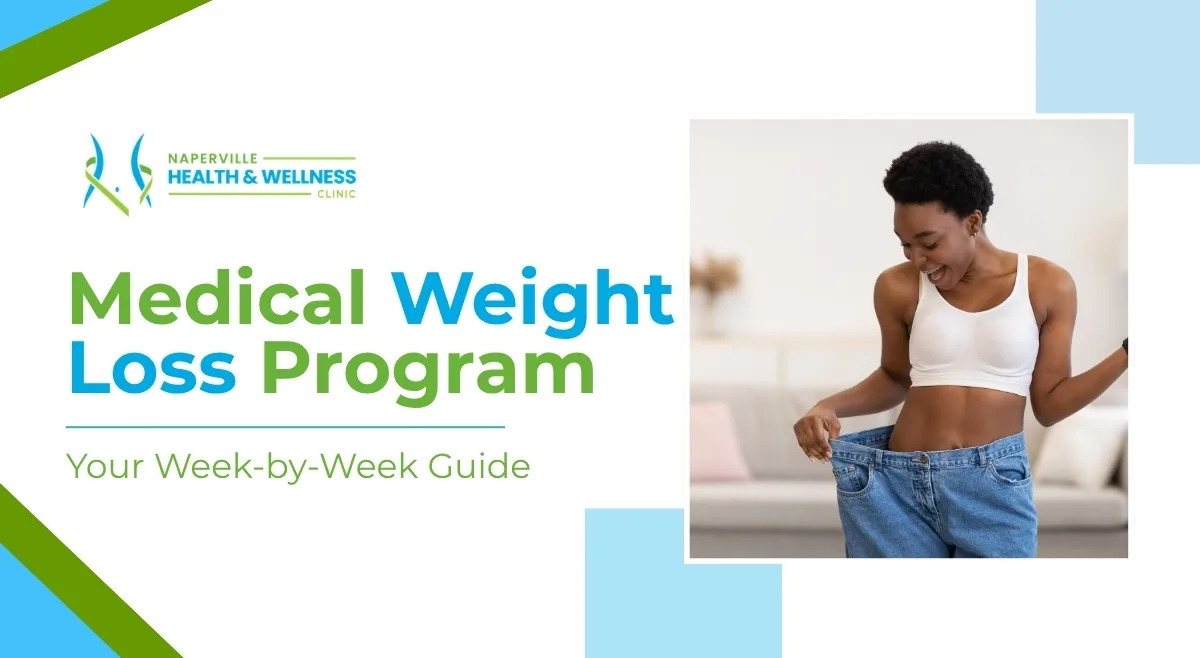
What a Medical Weight Loss Program Actually Includes (Week by Week)
Wondering what a medical weight loss program in Naperville actually involves? Here is a clear, week-by-week walkthrough: your first assessment and labs, when medication and coaching begin, the 3-month checkpoint, what maintenance looks like, and what the program fee covers.
Read More
Virtual Nutrition and Wellness Coaching: How Remote Sessions Actually Work
Too busy for in-person visits? Online nutrition coaching in Naperville, IL brings personal support to your home. Learn what virtual sessions look like, the tools that help, and how coaching fits a GLP-1 program.
Read MoreReady to Take the Next Step?
From medical weight loss and semaglutide to IV infusions and aesthetic treatments, our Naperville clinic offers a full range of health and wellness services built around your goals.