

Considering treatment in Naperville? Learn about our Laser Skin Rejuvenation service.
Most people do not come in asking for a laser. They come in because of something smaller and more personal. Foundation settling into lines that were not there last year. A cheek that looks dull in every photo. Brown patches along the hairline that no serum has touched in eighteen months.
None of that is vanity. MedlinePlus states that skin is the part of the body everyone else sees first, and skin changes are among the most visible signs of aging, including wrinkling, a loss of strength and elasticity in the connective tissue, and pigmented spots in areas that have taken years of sun. In the Chicago suburbs, that adds up quietly: school pickups, patios in July, a windshield full of afternoon light on I-88.
The question is rarely whether something can be done. It is whether the fix is worth the recovery. That is exactly where a Sciton MicroLaserPeel in Naperville tends to fit. It is a real resurfacing treatment, not a facial, and it asks for a few honest days of downtime rather than a few honest weeks.
What a MicroLaserPeel Actually Does
A MicroLaserPeel is an ablative laser treatment, which simply means it removes tissue rather than heating it from underneath. The Sciton system uses an erbium: YAG laser at a 2,940 nanometre wavelength, and the FDA has cleared Sciton's erbium: YAG laser for skin resurfacing and the treatment of wrinkles.
Here is the plain-English version. Water in your skin absorbs that specific wavelength extremely well. The laser passes over the treatment area and vaporises a controlled, very thin layer of the epidermis, the outermost layer of your skin. That damaged surface layer lifts away over the next several days, and the fresh skin underneath comes up smoother and more even.
The part that matters most is control. Your provider sets the depth before the first pass. A light setting stays superficial and asks for very little recovery. A deeper setting reaches further into the epidermis, does more, and asks for more downtime in return. The treatment is the same laser either way. The dial is what changes, and that dial should be set around your skin, your history, and what you can realistically take off your calendar.
How It Differs From a Chemical Peel
Both a chemical peel and a MicroLaserPeel do the same broad job: they injure the surface of the skin on purpose, so it rebuilds. They get there very differently.
A chemical peel uses acid. How deep it goes depends on the solution, its strength, how long it stays on, how oily or thick your skin is that day, and how evenly it is applied. Skilled hands manage all of that well, but the depth is estimated rather than set.
A laser peel measures its depth in advance. The same energy is delivered across the whole treatment area, so the result tends to be more uniform, and the recovery tends to be more predictable. For patients who have had an unpredictable peel before, that consistency is usually the selling point. It is worth knowing that both approaches are legitimate. MedlinePlus lists chemical peels and laser treatment among the options used for pigment conditions such as melasma. Neither one is a fad.
What It Treats Best
Texture, Fine Lines, and Sun Damage
This is the treatment's home ground. Because it resurfaces the whole epidermis rather than treating scattered spots, it tends to help the complaints that are about surface quality rather than a single mark: rough or grainy texture, dullness, fine lines around the eyes and mouth, and the crepey quality that shows up when skin has thinned.
Sun exposure is usually the story underneath all of it. MedlinePlus notes that reduced strength and elasticity in the connective tissue, known as elastosis, is more noticeable in sun-exposed areas and produces a leathery, weather-beaten appearance.
One important caveat, and we would rather say it up front than sell around it. Rough, scaly, crusty spots on sun-exposed skin are not automatically cosmetic. MedlinePlus states that Actinic keratosis is a precancerous growth that develops from long-term sun exposure, and it needs to be evaluated by a clinician, not smoothed over with an aesthetic treatment. If we see anything during your consultation that looks like it belongs in a dermatologist's chair, we will tell you so and help you get there.
Pigment and Tone
Surface pigment often responds nicely. Age spots and freckling that sit in the epidermis, the kind MedlinePlus describes as pigmented spots appearing in sun-exposed areas, are physically within reach of an epidermal peel.
Melasma is a different conversation. It is a stubborn, hormonally influenced pattern of dark patches, and MedlinePlus notes that being in the sun makes melasma more likely to develop. Heat and light can sometimes provoke it. If melasma is your main concern, a good provider will move slowly, may start with something other than a laser, and will not promise you a one-visit answer. Anyone who does is not being straight with you.
Downtime: What the First Week Looks Like
You will not be hiding for a fortnight, but you will not be at a wedding on day two either.
Day of treatment. Your skin feels hot and tight, quite a lot like a sunburn. It is red. You will be sent home with occlusive ointment and instructions to keep the area damp and undisturbed.
Days two and three. Colour deepens toward a bronzed or slightly tan look. The surface starts to feel rough, then begins to flake. This is the old layer leaving. Let it. Picking it off early is the single most common way patients cause a mark that did not need to happen.
Days four and five. Most of the flaking finishes. What is underneath looks pink, tight, and noticeably smoother.
Days six and seven. The pink fades toward normal, and most people are comfortable with makeup and back in front of colleagues.
Sun protection during this window is not optional advice; it is the treatment. The FDA advises using a broad-spectrum sunscreen with an SPF of 15 or higher, reapplying at least every two hours, and the CDC adds that sunscreen works best combined with protective clothing and hats. New skin has none of the accumulated defence the old layer had.
Finally, the honest risk list. This is surgery performed with light, and the FDA notes that risks of laser surgery include incomplete treatment, pain, infection, bleeding, scarring, and changes in skin colour. Those outcomes are uncommon in trained hands with appropriate settings, which is precisely why the FDA also encourages patients to discuss the benefits and risks of any dermatologic or aesthetic skin procedure with their health care provider.
MicroLaserPeel vs. IPL vs. Deeper Resurfacing
These three get confused constantly, so here is the short version.
IPL (intense pulsed light) is not a peel at all. It fires broadband light that is absorbed by colour in the skin, so it is aimed at brown spots and background redness. Your skin surface stays intact; you can usually return to normal life immediately, and dark spots may darken briefly before flaking off. What IPL does not do is change texture. If your complaint is roughness or fine lines, IPL will not solve it.
MicroLaserPeel works on the surface itself. It treats texture and tone together because it replaces the layer where both live. Expect several days of visible recovery rather than none.
Deeper ablative resurfacing goes past the epidermis into the dermis, where collagen remodelling happens. It addresses deeper wrinkles and scarring more aggressively, but the recovery is longer, the redness lasts longer, and the risk profile from the FDA list above carries more weight.
There is no universally best choice. There is only the one that matches your skin and the recovery you can actually absorb. A Sciton MicroLaserPeel in Naperville is often the middle path: more than a light treatment, less than a commitment to two weeks indoors.
Book a Laser Consultation in Naperville
A consultation is not a commitment. It is a conversation where someone looks carefully at your skin, listens to what actually bothers you, explains what a Sciton MicroLaserPeel in Naperville can and cannot do for your particular face, and tells you honestly if something else would serve you better. You will leave knowing the depth being recommended, the recovery to expect, and the cost, in writing.
Naperville Health & Wellness is here whenever you are ready. Contact us to book your laser consultation, and let us take the guesswork out of it together.
Call us at (877) 885-8784 to schedule your session or learn more.
Follow us on Facebook and Instagram for wellness tips, exclusive offers, and updates on our latest treatments!
FAQs
How long is MicroLaserPeel downtime?
Most patients look socially presentable in five to seven days. Lighter settings can be closer to three or four. Deeper settings run longer. The peeling itself usually starts around day two and finishes by day five.
How much does a Sciton laser peel cost?
Pricing depends on the treatment area and the depth chosen, so a figure is only meaningful after an in-person assessment. Plan for it to be an out-of-pocket expense. Medicare, for example, generally does not cover cosmetic surgery, defined as procedures intended to improve appearance rather than treat a medical condition, and most commercial plans follow similar logic.
How many treatments do you need?
Many people see a meaningful difference from one treatment. A series of two to four, spaced several weeks apart, is common when the goal is significant sun damage or more established texture. Your provider should tell you at the consultation which category you fall into rather than selling a package before looking at your skin.
Is it safe for darker skin tones?
It can be, with the right settings and an experienced provider, but it needs real caution. The FDA specifically lists changes in skin colour among the risks of laser surgery, and richly pigmented skin has a higher tendency toward pigment changes after any inflammation.
When can you wear makeup after?
Not until the skin has fully closed and the flaking has finished, which is typically around day five to seven. Applying makeup over healing skin invites irritation and infection. Mineral-based products are usually the gentlest first step back.
Does a MicroLaserPeel hurt?
During the pass, most people describe heat and a prickling sensation rather than sharp pain. Topical numbing is applied beforehand, and cool air or cold compresses help afterward. The sunburn-like feeling in the first few hours is the part patients remember most, and it settles quickly.
How should I prepare for my appointment?
Come in with a realistic calendar and an honest history. Tell us about recent sun exposure or tanning, any history of cold sores, current skincare actives such as retinoids, and any medication that increases sun sensitivity.
Treatments Covered in This Article
Related Articles
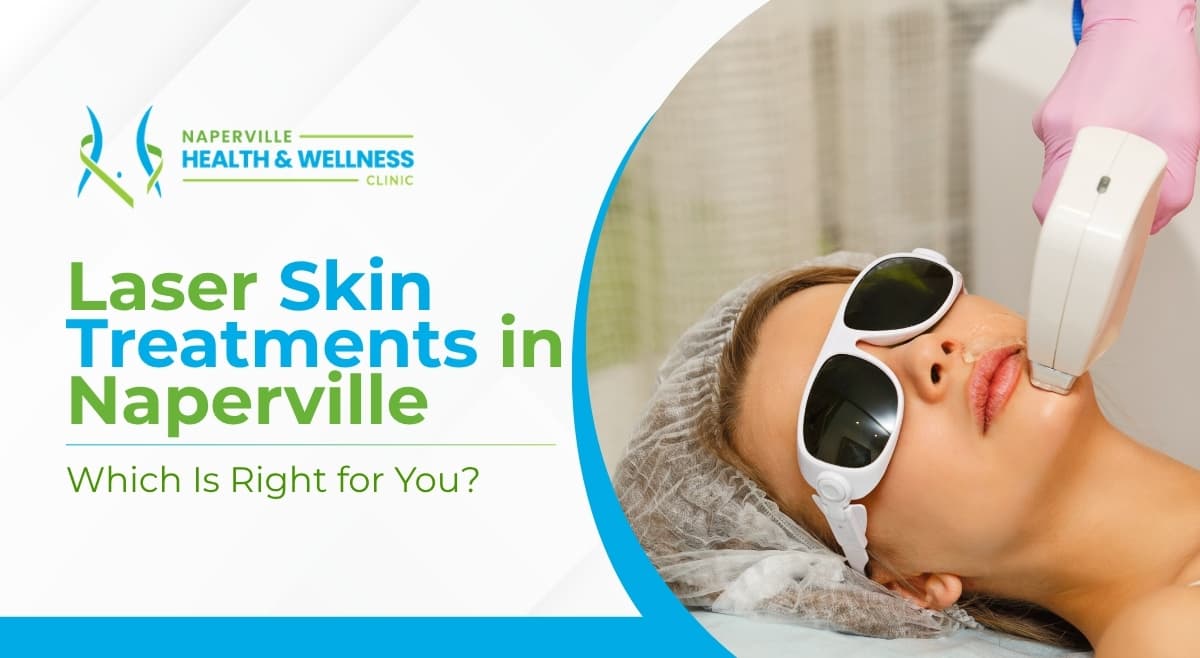
Laser Treatments Compared: Which One Is Right for Your Skin Concern
Not sure which laser fits your skin concern? Compare six laser skin treatments in Naperville, from rejuvenation and IPL to acne scar, vein, and hair removal, with downtime and session counts side by side.
Read More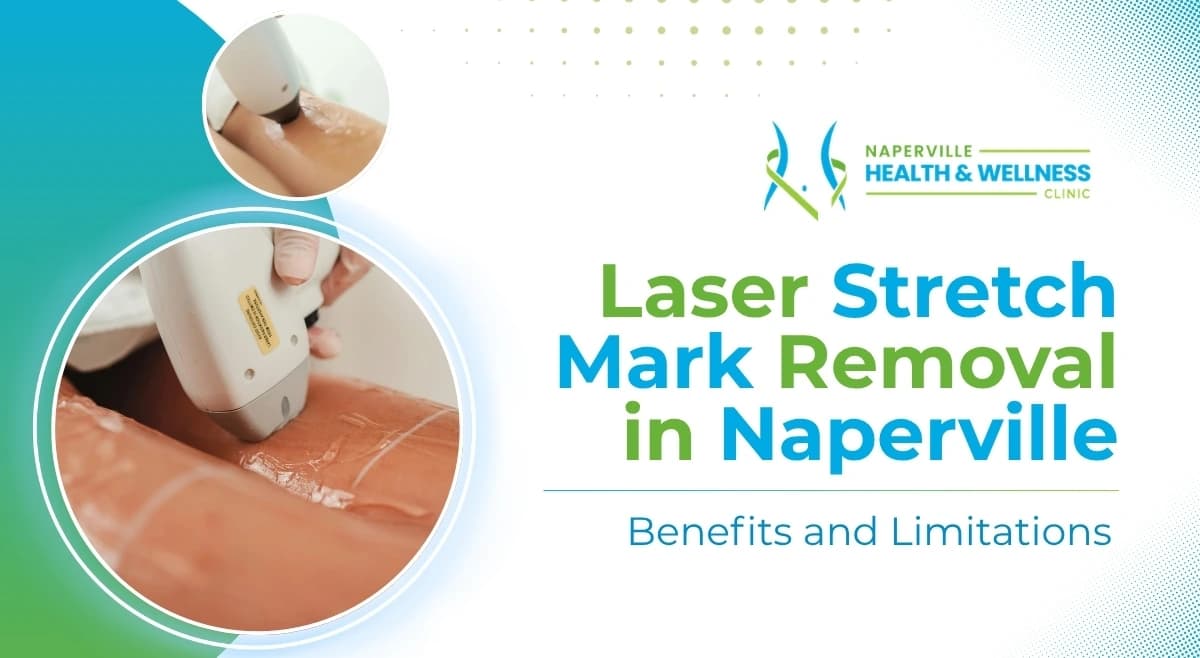
Stretch Mark Treatment in Naperville: What Laser Can and Cannot Do
Can laser really remove stretch marks? Learn why they form, how laser helps red and white marks, how many sessions you may need, and what results to realistically expect at our Naperville clinic.
Read More
Neck, Jawline, and 'Turkey Neck': Non-Surgical Options in Naperville
Noticing loose skin under your chin or a softer jawline? Learn why the neck ages differently, which non-surgical treatments can help, and when surgery is the more honest answer.
Read MoreReady to Take the Next Step?
From medical weight loss and semaglutide to IV infusions and aesthetic treatments, our Naperville clinic offers a full range of health and wellness services built around your goals.