
Considering treatment in Naperville? Learn about our Botox & Injectables service.
If you have ever sat in a consultation chair and heard the question "Botox or Dysport?", you are not alone in wondering whether it really matters. Both treatments soften the frown lines and expression creases that can make you look tired or upset when you feel perfectly fine. According to the FDA's own labels for Botox Cosmetic and Dysport, both are approved to temporarily improve frown lines. And both come from the same family of medicines.
They are not identical, though. The small differences between them can change how quickly you see results, how the treatment settles across your face, and what you pay at checkout.
More patients now ask us about Dysport in Naperville by name, often after spotting a lower price per unit online. That number only tells part of the story. Below, we walk you through the four differences that matter most, how we choose between the two for each area of your face, and the questions we hear most often in the treatment room. Everything here is checked against guidance from the U.S. Food and Drug Administration (FDA) and the National Institutes of Health (NIH).
Same Family, Different Formulas
Botox and Dysport are both made from botulinum toxin type A, a purified protein that relaxes specific muscles for a few months at a time. They work the same way. According to the FDA's Botox Cosmetic label, the toxin blocks acetylcholine, the chemical messenger a nerve uses to tell a muscle to contract. When the muscle under a wrinkle rests, the skin above it smooths out.
The difference is in the recipe. Each brand is made by a different company with its own purification process and added ingredients:
Botox Cosmetic (onabotulinumtoxinA): according to the FDA, it contains the toxin complex plus human albumin and sodium chloride.
Dysport (abobotulinumtoxinA): according to the FDA, it contains the toxin complex plus human albumin and lactose, and it may carry trace amounts of cow's milk protein. People with a cow's milk protein allergy should not receive it.
According to the NIH, botulinum toxin has been approved for cosmetic use since 2002, and the FDA lists Dysport's U.S. approval as 2009. Because the formulas differ, the FDA requires both labels to state that their units cannot be compared to or converted into units of any other botulinum toxin. In plain terms, one unit of Botox is not one unit of Dysport.
A quick safety note. According to the FDA, both products carry the same boxed warning: in rare cases, the effect can spread beyond the injection site, hours to weeks later. If you ever notice trouble swallowing, speaking, or breathing after any neurotoxin treatment, get medical help right away. The FDA also reports no confirmed serious cases of distant spread when Botox Cosmetic is used at its labeled cosmetic doses.
The Four Differences That Matter
Side by side, these two products are more alike than different. The four points below are where they part ways, and they are what we weigh before every Dysport Naperville appointment.
Botox Cosmetic | Dysport | |
Generic name | onabotulinumtoxinA | abobotulinumtoxinA |
Onset | 1 to 2 days, building over the first week | Similar, often slightly sooner in comparison studies |
How long it lasts | About 3 to 4 months | Up to about 4 months |
FDA-approved cosmetic areas | Frown lines, forehead lines, crow's feet, neck bands | Frown lines (adults under 65) |
Sources: FDA, Botox Cosmetic label; FDA, Dysport label; NIH.
Onset: Which Works Faster
According to the FDA, Botox Cosmetic usually starts relaxing the treated muscles one to two days after injection, and the effect builds through the first week. The FDA's Dysport label reports that in frown-line trials, most patients already showed clear improvement when checked at day 14.
When the two are tested head-to-head, Dysport often has a small edge. According to a comparison study published by the NIH, a higher share of Dysport patients saw early improvement in both frown lines and crow's feet. The gap is usually a day or two, not weeks. If you have a wedding or event coming up, we suggest booking at least two weeks ahead with either product.
Diffusion: Why Spread Changes the Result
Diffusion means how far the product travels from each injection point. A wider spread can blend smoothly across a broad muscle. A tighter spread gives more pinpoint control near delicate areas like the brows and eyelids.
Dysport has a reputation for spreading more, but the research is more nuanced. According to an NIH-indexed study, when both were injected at the same number of units, Botox actually covered a larger area, and the researchers concluded that spread depends mainly on dose. An NIH-published review found Dysport's field of effect was wider at a 2.5-to-1 ratio but not at 2-to-1. According to experts writing in another NIH-published article, correct dosing and careful placement matter most.
What this means for you: spread is something your injector controls through dose, dilution, and placement. It is one of the main reasons we pick one product over the other for a given area.
Longevity
Most people get about three to four months from either product. According to the FDA, Botox Cosmetic's effect on frown lines lasts roughly three to four months, with improvement measured up to day 120. The FDA's Dysport label says its effect may last up to four months.
Some patients feel Dysport lasts a little longer, but according to an NIH-published review, head-to-head studies point in different directions. Your muscle strength, your dose, and how active the area is usually matter more than the brand.
Units and Real Cost Comparison
This is where most of the confusion starts. Dysport is often priced lower per unit, but it takes more units to treat the same area. According to the FDA, the approved dose for frown lines is 20 units of Botox Cosmetic and 50 units of Dysport.
According to an NIH-published review, injectors commonly use about 2 to 2.5 units of Dysport for every unit of Botox in aesthetic practice, even though the FDA states there is no official conversion. So the fair way to compare is price per treatment area:
Total cost = number of units x price per unit
A lower unit price multiplied by more units often lands close to the same total. Cosmetic neurotoxin treatment is usually paid out of pocket. According to Medicare.gov, for example, Medicare does not cover most cosmetic procedures. That is why we quote by area, so you know your full price before we begin.
Which One We Recommend, Area by Area
There is no single winner. For patients asking about Dysport in Naperville, our answer depends on where you want treatment, how strong those muscles are, what has worked for you before, and the look you are after. Here is how we usually think it through.
Frown Lines Between the Brows
According to the FDA, both Botox Cosmetic and Dysport are approved for this area. This is where your preference and past results guide us most. If you want results a little sooner, or you felt Botox faded early for you, Dysport is a good one to try.
Forehead Lines
We usually lean toward Botox Cosmetic here. According to the FDA, it is approved for forehead lines treated together with frown lines, and its label lists a heavy or drooping brow as a known side effect of forehead treatment. A tighter spread helps us protect your brow position, so precision matters.
Crow's Feet
According to the FDA, Botox Cosmetic is approved for crow's feet. In the U.S., using Dysport here is "off-label," meaning outside its approved uses, and the FDA's Dysport medication guide notes that its safety and effectiveness for other wrinkles are not established. Even so, according to a comparison study published by the NIH, Dysport performs well around the eyes, and its softer spread can blend a wide fan of lines. We will always tell you when a product is being used outside its approved areas, so you can decide with full information.
Neck Bands
According to the FDA, Botox Cosmetic is the only one of the two approved for vertical neck bands, using 26 to 36 units depending on how many bands you have. The neck sits close to the muscles you use to swallow and speak, so this is a Botox area for us.
Can You Switch Between Them?
Yes, and many people do. Some switch because one product seemed to wear off quickly, others because of price or simple curiosity. A few things make the switch safe and smooth:
Tell us exactly what you had before. According to the FDA medication guides for Dysport and Botox Cosmetic, you should share which botulinum toxin product you received and whether you had any in the last four months.
Expect a new unit count. According to the FDA, units do not convert one to one, so your injector will re-plan your dose rather than copy your old number.
Let the last treatment wear off first. According to the FDA, giving a second toxin before the first has faded can cause extra muscle weakness.
What switching will not fix is true resistance. According to a case report published by the NIH, the body can, in rare cases, make antibodies that block botulinum toxin, and changing to another type A product does not get around them. The good news is that this is very uncommon in cosmetic use. According to the FDA, none of the 1,554 people tested in Dysport's frown-line studies developed neutralizing antibodies. The FDA also notes that using the lowest effective dose at the longest sensible interval helps keep that risk low.
Book a Neurotoxin Consultation
Choosing between Botox and Dysport should not feel like a guessing game. At Naperville Health & Wellness, your first visit is a conversation, not a sales pitch. We look at how your face moves, ask what has and has not worked for you before, and explain which product we would choose for each area and why. You will know your unit count and your total price before a single injection.
Call us at (877) 885-8784 to schedule your session or learn more.
Follow us on Facebook and Instagram for wellness tips, exclusive offers, and updates on our latest treatments!
FAQs
Is Dysport cheaper than Botox?
Per unit, usually yes. Per treatment, often not by much, because Dysport needs more units for the same area. According to the FDA, the approved frown-line dose is 50 units of Dysport versus 20 units of Botox Cosmetic. Most Dysport Naperville patients find the totals land fairly close, so ask for a price per area.
Does Dysport look more natural?
A natural look comes from the right dose in the right place, not from the brand. According to an NIH-published review, Dysport can spread a little wider at typical doses, which some people feel looks softer. Either product can look natural or overdone, depending on the plan.
How many units of Dysport equal Botox?
There is no official conversion. The FDA says you can't convert units from one product to another. In practice, according to an NIH-published review, injectors often use about 2 to 2.5 Dysport units per Botox unit.
Which lasts longer?
They are close. According to the FDA labels for Botox Cosmetic and Dysport, Botox Cosmetic typically lasts about three to four months, and Dysport may last up to four months. Your dose and muscle strength make the bigger difference.
Can you get both in the same session?
We do not mix them in one visit. According to the FDA, the effects of giving different botulinum toxins at the same time or within several months are unknown. One product per session keeps your results predictable and safe.
Are Botox and Dysport FDA approved?
Yes. According to the FDA, Botox Cosmetic is approved for frown lines, forehead lines, crow's feet, and neck bands in adults. The FDA approves Dysport for frown lines in adults under 65.
How often can I get treatment?
No more often than every three months. According to the FDA, Dysport should not be given more often than that, and the FDA notes that treating more often than every three months with Botox Cosmetic has not been studied.
Treatments Covered in This Article
Related Articles
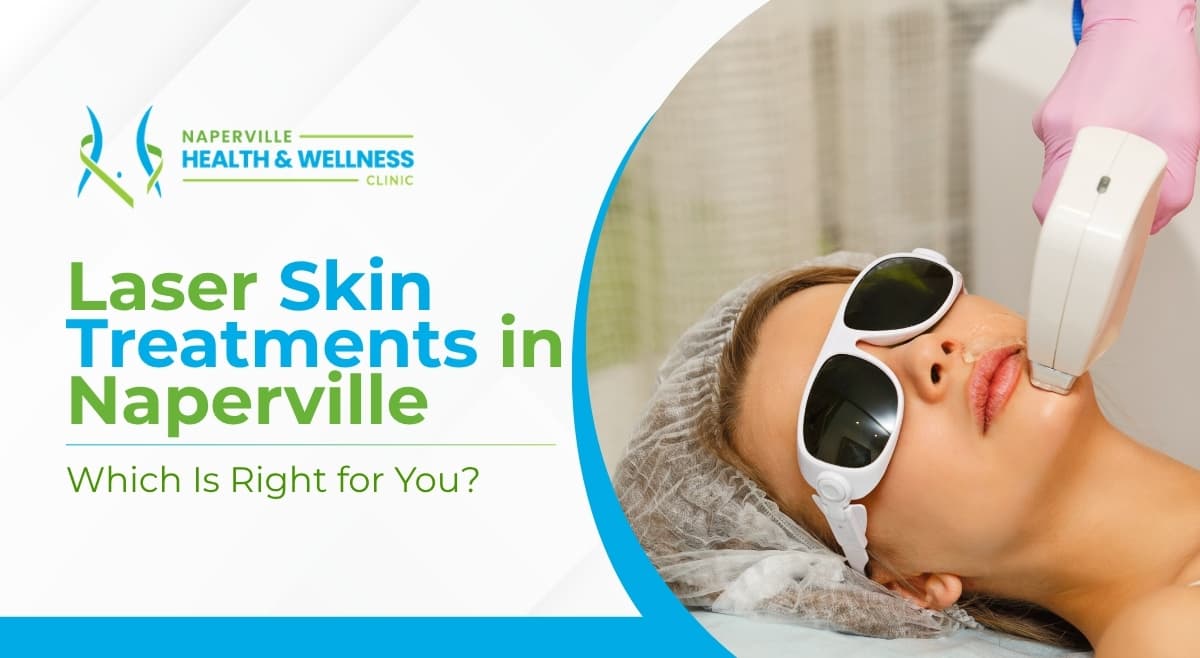
Laser Treatments Compared: Which One Is Right for Your Skin Concern
Not sure which laser fits your skin concern? Compare six laser skin treatments in Naperville, from rejuvenation and IPL to acne scar, vein, and hair removal, with downtime and session counts side by side.
Read More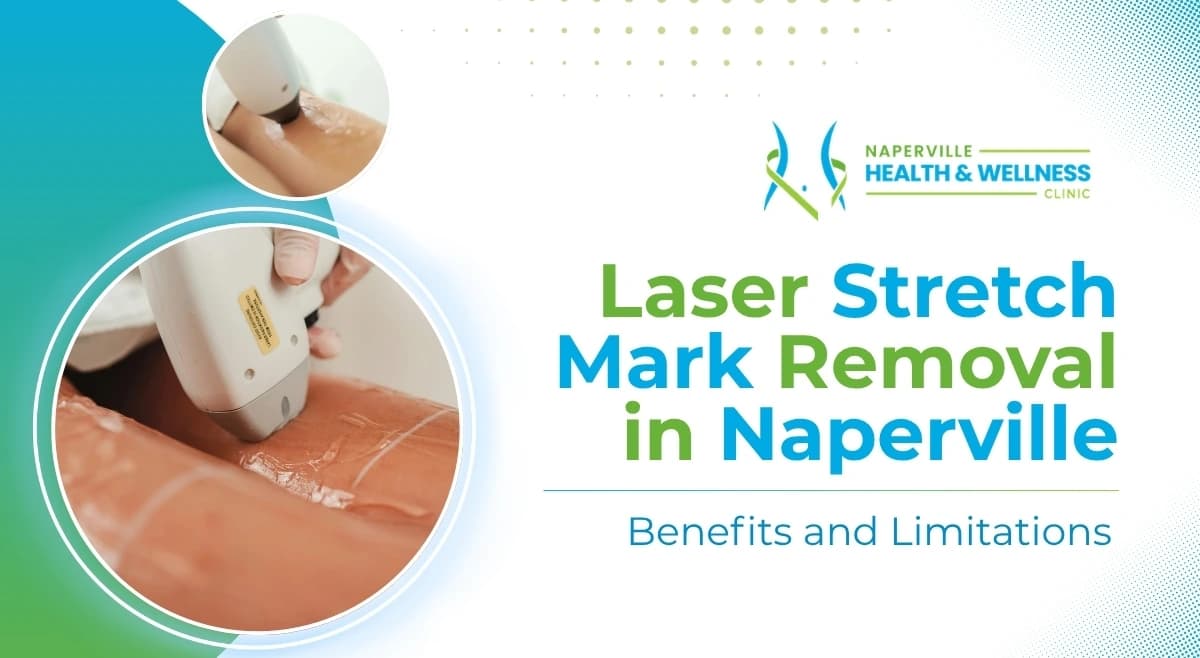
Stretch Mark Treatment in Naperville: What Laser Can and Cannot Do
Can laser really remove stretch marks? Learn why they form, how laser helps red and white marks, how many sessions you may need, and what results to realistically expect at our Naperville clinic.
Read More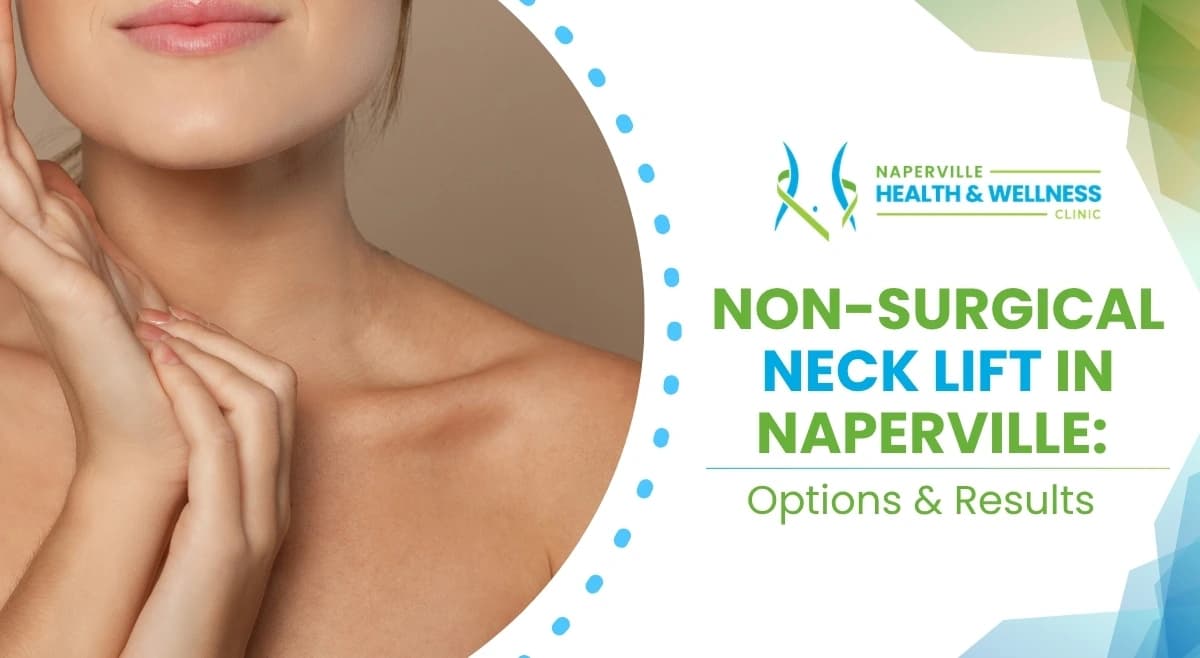
Neck, Jawline, and 'Turkey Neck': Non-Surgical Options in Naperville
Noticing loose skin under your chin or a softer jawline? Learn why the neck ages differently, which non-surgical treatments can help, and when surgery is the more honest answer.
Read MoreReady to Take the Next Step?
From medical weight loss and semaglutide to IV infusions and aesthetic treatments, our Naperville clinic offers a full range of health and wellness services built around your goals.